
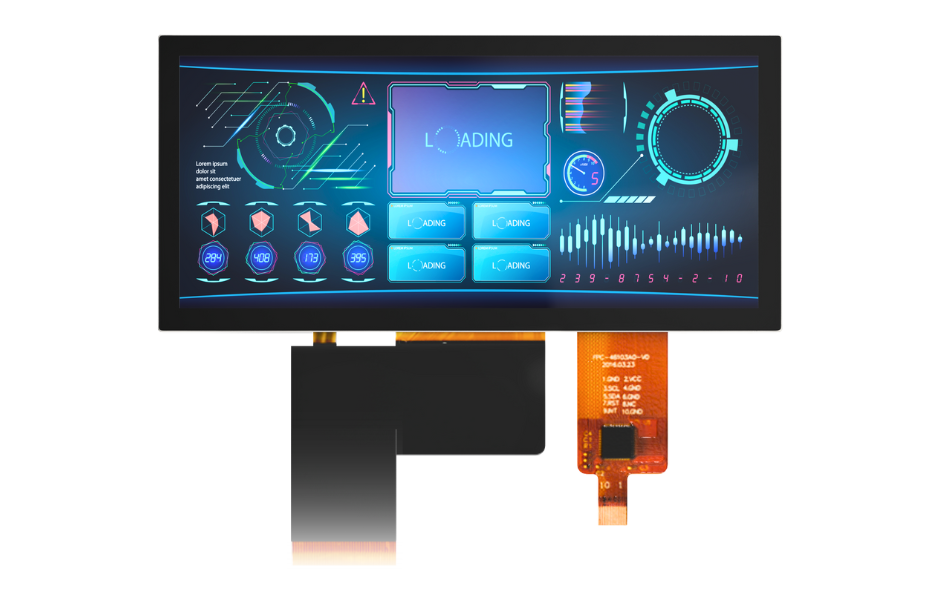
New product design is an opportunity to address production risks early. Obsolescence, delivery, quality, performance and cost do not disappear when the prototype lights up. A display brief brings those future production questions into the design review while the team still has options.
Describe the application before choosing a panel
Begin with the operator’s task, information density, viewing conditions and physical constraints. Decide which requirements are fixed and which are preferences. Include the annual production outlook and intended product life so the supplier understands the manufacturing program rather than just the sample request.
A standard display may fit. A semi-custom arrangement may address a cable, lens, touch or backlight need. A custom approach may be appropriate where the requirements cannot be met otherwise. Compare those paths against the complete application rather than assuming custom always costs more or standard always reduces risk.
Bring the interfaces into one controlled document
Record the outline, viewing area, mounting approach, connector and cable routing. Add the power rails, interface, host processor and software constraints. Describe the optical stack and touch requirements where relevant. Unresolved items should be marked as questions, not silently converted into specifications.
Assign owners to decisions that cross disciplines. A lens choice can affect optics and touch. A cable position can affect the enclosure and signal path. A backlight requirement can affect power and thermal behavior. These are reasons to review the assembly together before committing the enclosure or electronics.
Plan the move from sample to released production
Define what the first samples need to prove, which tests require the final assembly and who approves the result. Agree on drawing revisions, acceptance criteria and the handling of future changes. A successful demonstration is evidence for a decision; it is not a substitute for a release process.
Ask about supply expectations, notification of changes, replenishment arrangements and options if a key component changes. Do not treat an unconfirmed availability statement as a lifetime guarantee. The aim is a clear production handoff: a released specification, approved samples and known responsibilities for the program ahead.
Bring this to your next program review
- Define user task, environment, annual demand and product life.
- List mechanical, electrical, optical and touch constraints.
- Compare standard, semi-custom and custom approaches against those requirements.
- Assign sample tests, release approval and change-control responsibilities.
References & further reading
Application-specific requirements and acceptance criteria need engineering confirmation.